
Plagiarism is one of the most serious mistakes a student can make in academic writing. Even a well-researched and well-written essay can lead to penalties if borrowed ideas, words, or sources are not credited properly. In 2026, schools, colleges, and universities continue to use advanced plagiarism detection systems, making originality and correct citation more important than ever.
Many students think plagiarism only means copying text directly from a website. In reality, plagiarism includes several forms, including poor paraphrasing, missing citations, using someone else’s ideas without credit, and submitting AI-generated work as personal writing when prohibited.
The good news is that plagiarism is avoidable. Once you understand how it happens and how to prevent it, writing original academic essays becomes much easier. This guide explains how to avoid plagiarism in academic essays with clear strategies, practical examples, and best practices for students in 2026.
What Is Plagiarism?
Plagiarism happens when you present someone else’s words, ideas, research, or work as your own without proper acknowledgment.
This can include:
- Copying text without quotation marks
- Paraphrasing too closely to the original source
- Using ideas without citation
- Submitting another person’s work
- Reusing your own previous paper without permission
- Using AI-generated content dishonestly when rules prohibit it
Plagiarism can be intentional or accidental, but both can create academic problems.
Why Avoiding Plagiarism Matters
Academic institutions value honesty, original thinking, and proper research methods.
Avoiding plagiarism helps you:
- Protect your academic reputation
- Earn grades fairly
- Develop real writing skills
- Respect intellectual property
- Build trust with teachers and professors
- Avoid penalties or disciplinary action
Original work always has more value than copied work.
Common Types of Plagiarism Students Make
Direct Plagiarism
Copying sentences or paragraphs word-for-word without citation.
Mosaic Plagiarism
Changing a few words while keeping the original sentence structure.
Paraphrasing Without Citation
Rewriting someone else’s idea in your own words but not naming the source.
Self-Plagiarism
Submitting your old essay again without permission.
AI Misuse
Submitting fully AI-written content as personal work when academic rules require original authorship.
Understand When Citation Is Required
You should cite sources when using:
- Direct quotations
- Paraphrased ideas
- Statistics
- Research findings
- Theories or models
- Charts, images, or tables
- Specific facts that are not common knowledge
Usually No Citation Needed:
- Your own opinions
- Your own analysis
- Personal experience
- Common knowledge facts
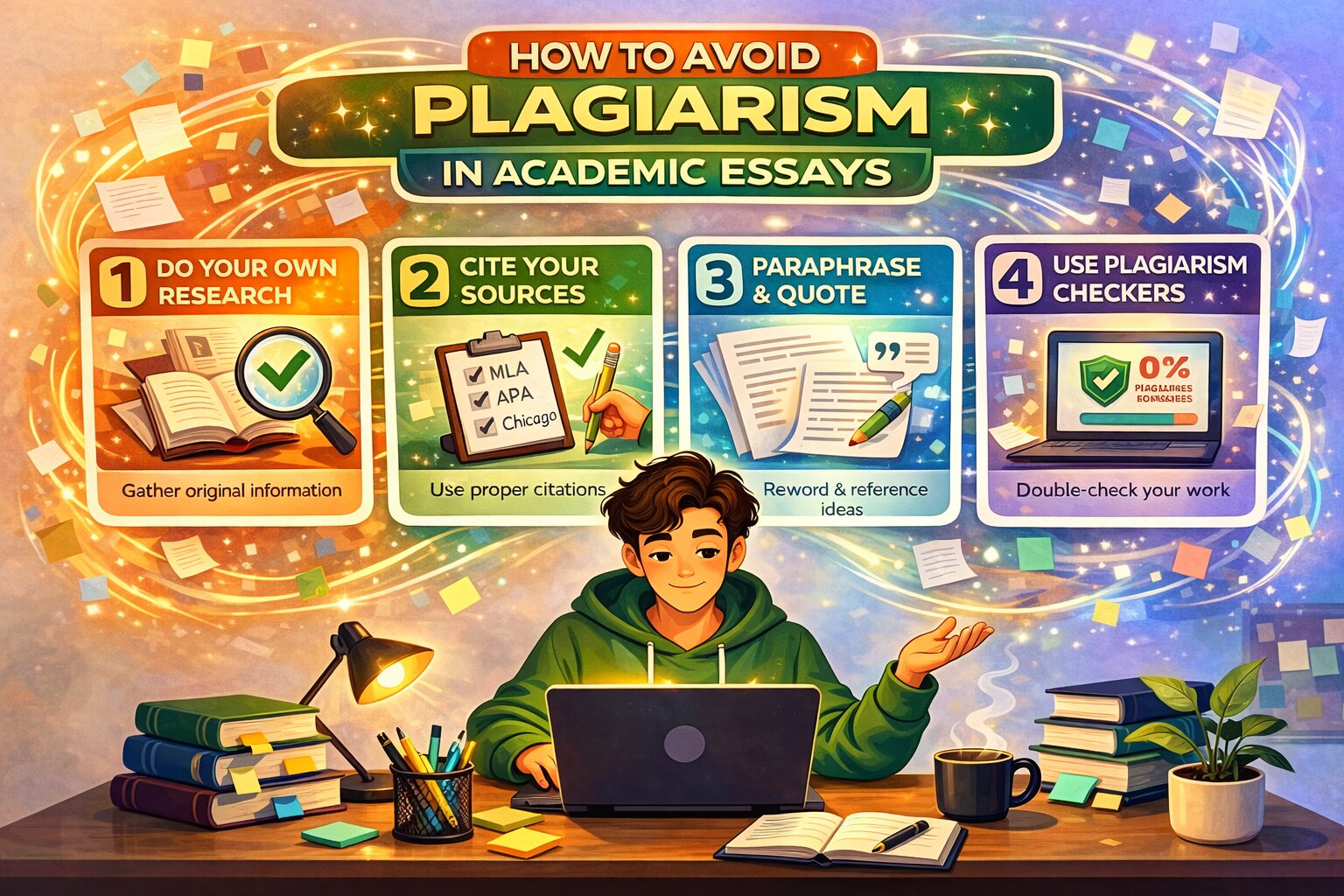
Use Quotations Correctly
If you copy exact wording from a source, place the text in quotation marks and include a citation.
Correct Example:
“Consistent sleep patterns improve concentration and memory” (Smith, 2025, p. 18).
Use quotations only when the original wording is especially valuable or precise.
Learn How to Paraphrase Properly
Paraphrasing means expressing a source idea completely in your own words while keeping the original meaning.
Original Source:
Students who sleep regularly often perform better academically.
Weak Paraphrase:
Students who sleep regularly usually perform better academically.
This is too similar.
Strong Paraphrase:
Academic success is often linked to stable sleep habits that support focus and learning efficiency.
Even with a strong paraphrase, citation is still required.
Take Notes Carefully While Researching
Many plagiarism mistakes happen because students forget where information came from.
While researching, always record:
- Author name
- Title
- Publication date
- Page number
- Website or journal name
- URL or DOI
Good note-taking prevents confusion later.
Separate Your Ideas from Source Ideas
When drafting, clearly distinguish between:
- Your own analysis
- Facts from sources
- Quoted material
- Paraphrased material
This makes it easier to cite correctly and preserve your own voice.
Use Citation Styles Correctly
Different subjects require different citation systems.
- MLA – Humanities and literature
- APA – Psychology, education, business
- Chicago – History and research writing
Use one style consistently throughout the essay.
Use AI Tools Responsibly in 2026
AI tools are common in modern education, but misuse can create plagiarism and academic integrity issues.
Safe Uses of AI:
- Brainstorming ideas
- Improving grammar
- Creating outlines
- Clarifying structure
Risky Uses of AI:
- Submitting AI text as your own work
- Using fake citations
- Copying generated content without revision
- Ignoring school AI policies
Always check your institution’s rules.
Use Plagiarism Checkers Before Submission
Many students use originality-checking tools before submitting essays.
Popular options include:
- Turnitin (institutional)
- Grammarly plagiarism tools
- Copyscape (web content)
- University writing portals
These tools can help identify accidental overlap, but they do not replace good writing habits.
How to Write More Original Essays
The best way to avoid plagiarism is to create essays centered on your own thinking.
Use sources to support your ideas, not replace them.
Better Writing Formula:
- Your argument
- Your structure
- Your analysis
- Sources as evidence
This produces stronger and more authentic essays.
Common Mistakes to Avoid
- Copying from websites during drafting
- Changing only a few words from the source
- Forgetting in-text citations
- Using quotes without quotation marks
- Leaving references until the end
- Using AI-generated sources that do not exist
- Reusing old essays without permission
Quick Checklist Before Submission
- Did I cite all borrowed ideas?
- Are direct quotes marked correctly?
- Did I paraphrase fully in my own words?
- Does every citation appear in the reference list?
- Did I follow the required style guide?
- Does the essay reflect my own thinking?
Best Habits for Students in 2026
- Start research early
- Keep source notes organized
- Cite while writing, not later
- Use quotes sparingly
- Prioritize your own analysis
- Check AI policies before using tools
- Review the final paper carefully
Conclusion
Learning how to avoid plagiarism in academic essays is essential for success in 2026. Plagiarism is not only about copying words—it also includes missing citations, poor paraphrasing, and dishonest use of outside material.
The best protection is simple: understand the rules, cite correctly, organize sources carefully, and make your own thinking the center of every essay.
In 2026, strong students are not those who copy information—they are those who transform information into original, honest, and thoughtful academic writing.